
If you’ve ever gotten into your vehicle, sat down, and in an instant you catch a whiff of an unusual odor from your vehicle’s exhaust, you likely know something isn’t quite right. While cars may naturally produce a slight smell, a strong odor of exhaust fumes or sulfur could mean your vehicle is having problems within its powertrain or exhaust system.
In this article, we’re going over the common causes of an exhaust odor, what it could mean for your vehicle, and how to prevent these issues from popping up in the future.
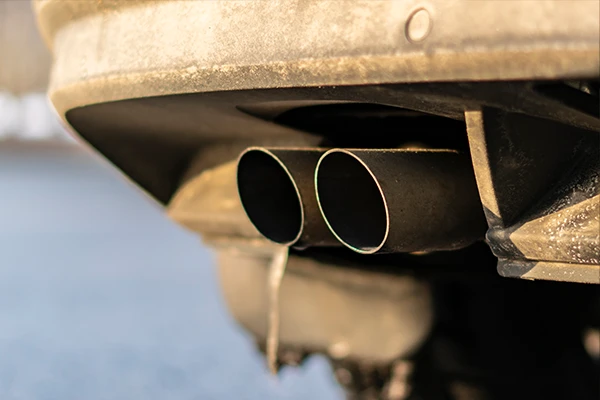
Strong Regular Exhaust Smell
It’s common for a minor odor from your vehicle’s exhaust is to be expected; however, if you notice that the smell has become stronger and is present in your interior, it could be a sign of a leak somewhere in your exhaust system.
An exhaust leak occurs before the exhaust gases reach the catalytic converter, allowing unfiltered fumes to escape into the surrounding air and producing a strong, familiar exhaust odor. These leaks should never be ignored, as they can interfere with the oxygen sensor’s readings and cause an improper air-fuel ratio. This may cause problems with performance and efficiency, and may even result in severe damage to the catalytic converter.
Gasoline Smell
A gasoline smell coming from your exhaust is typically due to an improper air-fuel ratio. When the engine is running in a rich condition (excess fuel), it will force uncombusted gasoline and its fumes through the exhaust system. A rich condition can be caused by a variety of issues, such as the oxygen sensor issues we covered, leaking injectors, or a faulty mass airflow sensor.
The smell of gasoline should always be taken seriously, as rich conditions can cause damage to your engine and emissions system. The odor could also be due to a fuel leak, which needs to be addressed by a trusted professional as soon as possible to avoid dangerous circumstances.
Rotten Eggs Smell
If you notice a distinct sulfur smell (often described as rotten eggs), it’s a telltale sign of a problem with the emissions system, particularly the catalytic converter. This issue can arise from internal damage to the converter’s precious metal honeycomb or from a leak in its outer casing. When the catalytic converter isn’t working properly, unconverted exhaust fumes can escape into the surrounding air.
A faulty catalytic converter will not only lead to this unpleasant smell, but it may also cause performance and efficiency issues as well as prevent you from passing your emissions test in applicable areas.
Sweet Smell
While at first, a sweet smell from your vehicle may seem like a non-issue, this symptom is an indicator of internal coolant burn. When the head gasket is damaged, it will allow for coolant to seep into the combustion chamber, where it will be burnt off during combustion, emitting a sweet smell.
Internal coolant burn should be taken seriously, as it can lead to critical loss of the coolant your engine needs to stay at a safe temperature, as well as disrupting the engine’s combustion and leading to efficiency and performance issues.
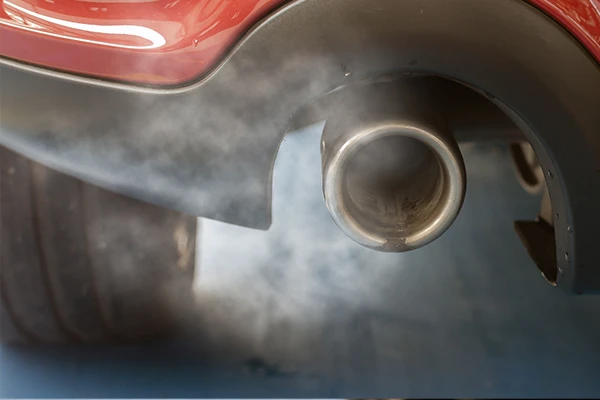
Exhaust Services in Federal Way
If you notice a strong odor from your exhaust, or suspect any other exhaust system-related issues, trust your vehicle to the experts at Northshore Automotive. Our ASE-certified technicians have years of experience working on Exhaust systems in Federal Way and its surrounding areas. Don’t hesitate to reach out to the experienced team at Northshore Automotive in Federal Way, WA.